The Best Linen Weight for Dresses, Shirts and Trousers
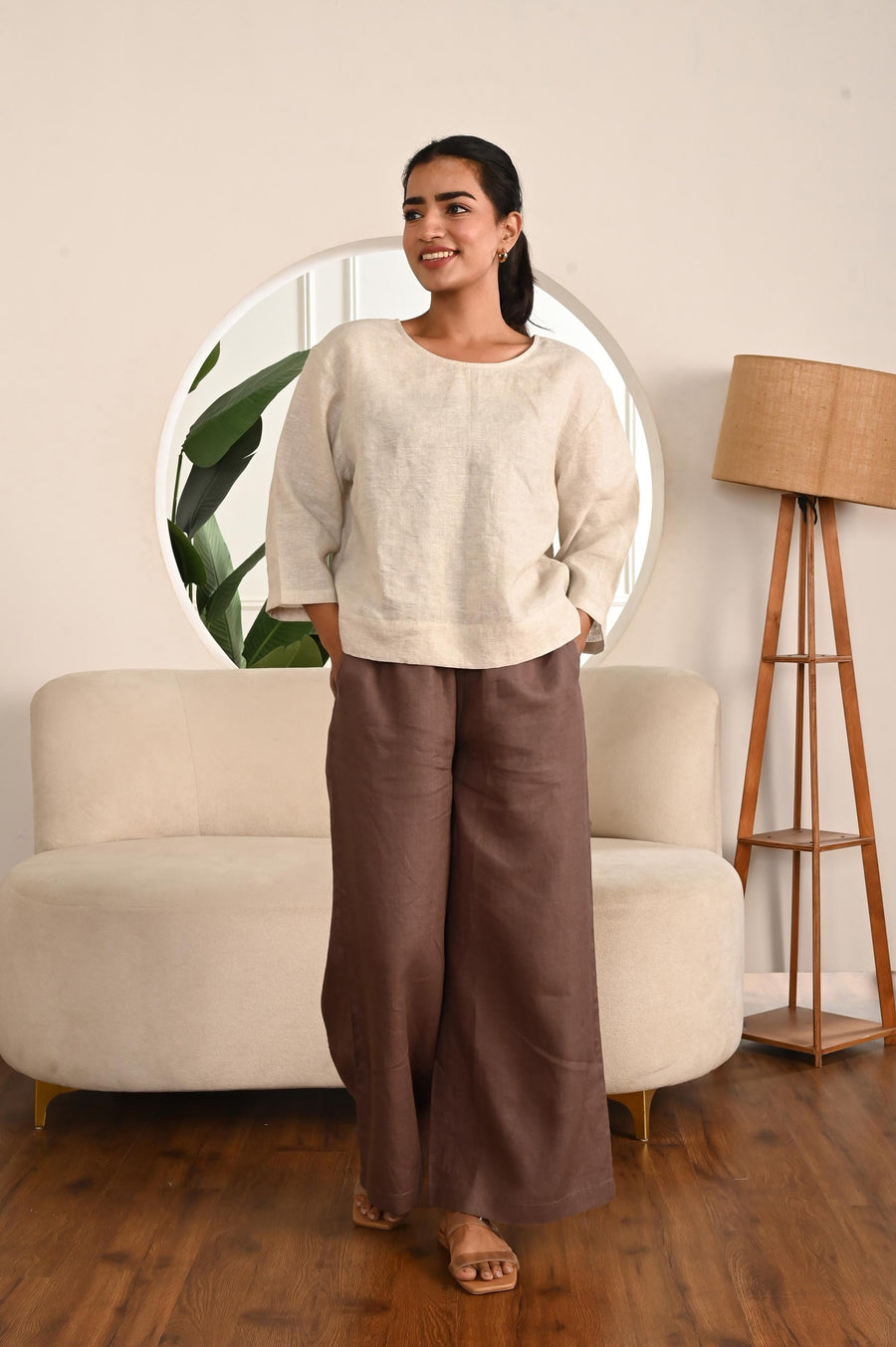
The right linen weight depends on what the garment has to do. A shirt needs a collar that stands. A wide trouser needs to hang. A beach top needs to let air through. For most clothing the answer is a medium linen of about 165 to 180 gsm, and lighter or heavier cloth each do one job better. Here is how to choose, garment by garment. What GSM means in linen explains the numbers.
By garment
- Dresses. Medium for most shapes: shifts, tunics, shirt dresses and midi dresses hang cleanly at 165 to 180 gsm. Choose light for a loose summer dress that should float. Choose heavy for pleats, a belted waist or a full skirt that should keep its line, and for autumn and winter.
- Shirts. Medium. A collar, a button placket and cuffs need cloth with some body, and 165 to 180 gsm gives it without weight. Our men's shirts and women's linen shirts are cut in it.
- Tops and blouses. Medium as an everyday weight. Light for a loose top in high heat, or for one worn as a layer.
- Trousers. Medium for summer trousers. Heavy if you want a wide leg to hang straight and swing as you walk.
- Co-ord sets. Keep both pieces in the same weight, so that the top and the bottom hang alike.
By climate and season
- Hot and humid. Light or medium. Both let air through; light dries faster. See is linen good for hot, humid weather?
- Warm, dry summers and holidays. Medium. It travels well and covers day and evening.
- Spring and autumn. Medium, with a layer over or under it. Wearing linen in cooler weather shows how.
- Winter. Heavy, worn over a knit. It is less cold than light linen, though no linen insulates like wool.
By the look you want
A simple test settles most choices: do you want the garment to move, or to hold? Movement asks for less weight. Structure asks for more. A tiered sundress wants to move. A pleated shirt dress wants to hold.
What we cut as standard
Our summer dresses, tops and trousers and our men's shirts are cut in medium linen, 165 to 180 gsm. The Winter Linen collection is cut in heavy linen, 230 to 245 gsm. Light linen, 120 to 130 gsm, is made on request.
Each piece is cut after you order, so you can ask for a different weight before you buy. Our three linen weights compared explains how.
The verdict
Start from medium and move only if you have a reason: down a weight for heat and float, up a weight for structure and cold. The weight decides how a garment hangs. It does not decide how well it is made, which is a separate question: is higher GSM better quality linen?
Frequently asked questions
What is the best GSM for a linen dress?
About 165 to 180 gsm for most dresses. Go lighter, 120 to 130 gsm, for a loose dress that should float, and heavier, 230 gsm or more, for pleats, structure and cooler months.
What is the best GSM for a linen shirt?
A medium linen of about 165 to 180 gsm. It has enough body for a collar, a placket and cuffs without feeling heavy.
What weight linen is best for trousers?
Medium, 165 to 180 gsm, for summer trousers. Heavy linen, 230 gsm or more, makes a wide leg hang straighter.
What linen weight is best for hot weather?
Light or medium. Both let air through, and light linen dries faster.
Can I wear linen in winter?
Yes, in a heavy weight of 230 gsm or more, layered over a knit. It is less cold than light linen but not as warm as wool.
Which linen weight creases least?
All linen creases. Heavier linen tends to form softer and fewer creases, because a thicker cloth does not fold as sharply.