What Is GSM in Linen? Fabric Weight Explained
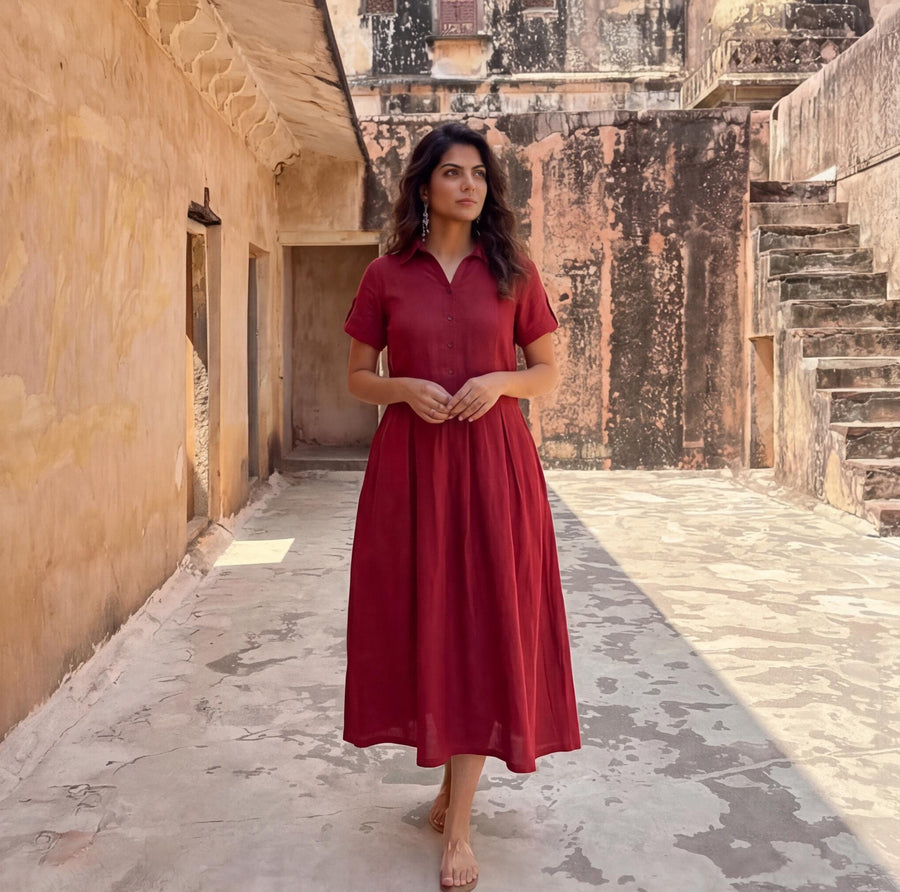
GSM stands for grams per square metre. It is the weight of a piece of cloth one metre wide and one metre long, and it is the most useful single number on a linen product page. A higher figure means a thicker, denser cloth. Here is how to read it, what it changes in a garment, and the three weights we cut our own clothing from.
How GSM is measured
A mill cuts a small disc of cloth of a known area, weighs it, and scales the result up to one square metre. The figure does not depend on the width of the roll or the size of the garment, which is why two makers can use it to compare cloth.
In the United States the same idea is written as ounces per square yard. One ounce per square yard is about 34 gsm, so a 170 gsm linen is a 5 ounce linen.
What the number means in linen
There is no official line between light, medium and heavy linen, and makers draw it in different places. As a working guide for clothing:
- Under about 150 gsm is light linen. It is thin and airy, and it moves easily.
- About 150 to 200 gsm is medium linen, the everyday weight for dresses, shirts and trousers.
- Above about 200 gsm is heavy linen, used for structured dresses, jackets and cooler weather.
Our three weights
We cut our clothing from pure linen in three weights, and we state each one as a range:
- Light, 120 to 130 gsm (about 3.5 to 3.8 ounces per square yard). Made on request.
- Medium, 165 to 180 gsm (about 4.9 to 5.3 ounces). Our summer dresses, tops and trousers and our men's shirts are cut in this weight as standard.
- Heavy, 230 to 245 gsm (about 6.8 to 7.2 ounces). This is the cloth of the Winter Linen collection.
Our three linen weights compared describes how each one feels and hangs, and how to ask for a different weight.
Why a range and not one figure
Linen yarn is uneven by nature. It is thicker in some places and finer in others, and that is what gives the cloth its texture. Dyeing and finishing change the weight a little as well, so two rolls from the same mill can differ by a few grams. A single exact figure is a rounded one. A range is the more accurate statement, so a range is what we give.
What GSM changes in a garment
- How it hangs. Light linen floats and moves with you. Heavier linen hangs straighter and holds a collar, a pleat or a full skirt in place.
- Warmth. A denser cloth lets less air through, so it feels less cold. No linen insulates like wool.
- Creasing. All linen creases. Heavier linen tends to form softer and fewer creases, because a thicker cloth does not fold as sharply. Does linen wrinkle? explains why.
- Drying time. A heavier cloth holds more water and takes longer to dry.
- Feel when new. Heavier linen can feel firmer at first. All linen softens with washing.
What GSM does not tell you
Weight is a measure of thickness. It says nothing about the fibre, how evenly the cloth is woven, or how well the garment is cut and stitched. A heavy linen can be coarse and a light one can be fine. We cover that in is higher GSM better quality linen?
The verdict
Read the GSM first, because it tells you how the garment will hang and which season it suits. Then read the rest of the page for what the number cannot show. If a product page gives no weight at all, ask before you order.
Frequently asked questions
What does GSM mean in fabric?
Grams per square metre: the weight of one square metre of the cloth. The higher the figure, the thicker and denser the fabric.
What is a good GSM for linen clothing?
It depends on the garment and the season. About 120 to 130 gsm is light, 165 to 180 gsm is a medium everyday weight for dresses and shirts, and 230 gsm and above is heavy linen for structure and cooler weather.
How do I convert GSM to ounces?
Divide by 34. A 170 gsm linen is about 5 ounces per square yard, and a 245 gsm linen is about 7.2 ounces.
Is higher GSM linen better?
It is thicker, which is a different thing. Quality comes from the fibre, the weave and the making. Weight only tells you how substantial the cloth is.
What GSM is PehroDesign linen?
We use three weights of pure linen: light at 120 to 130 gsm, medium at 165 to 180 gsm and heavy at 230 to 245 gsm. Medium is the standard for our summer clothing and men's shirts, and the Winter Linen collection is heavy.
Why is linen weight given as a range?
Linen yarn varies in thickness, and dyeing and finishing change the weight slightly, so cloth from the same mill differs by a few grams from roll to roll.