How to Measure Yourself for Made to Measure Clothes
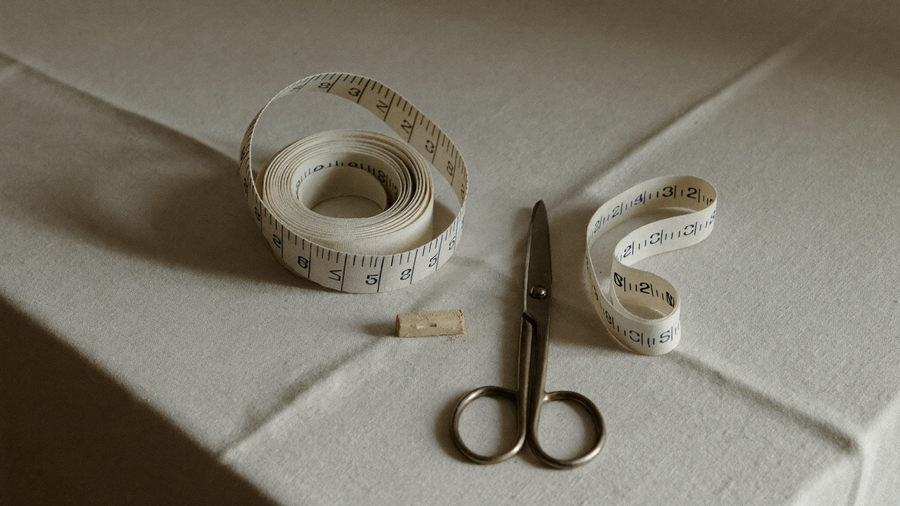
Made to measure removes the part of online shopping that goes wrong most often: guessing which standard size sits closest to your body. It only works, though, if the numbers you send are accurate. A garment cut from a measurement taken over a thick jumper will fit like a garment cut for somebody else.
This guide covers how to take your own measurements properly, which numbers actually matter, and the mistakes behind most fit problems.
What you need before you start
- A soft tape measure, the fabric kind used for sewing. A builder's metal tape will not follow the curve of a body.
- Close fitting clothing, or just underwear. Never measure over jeans, jackets or knitwear.
- A mirror, or better, a second person. Several measurements are genuinely hard to take accurately on yourself.
- Shoes off, posture relaxed and upright, weight even on both feet.
Measure in the morning if you can. Bodies change slightly across a day, and morning numbers give the most consistent baseline.
The one rule that fixes most errors
The tape should sit flat against your body, level with the floor, snug but not compressing. You should be able to slide one finger underneath it comfortably.
If the tape digs in, the number comes out too small and the finished garment will pull. If the tape sags, the number comes out too large and the garment will hang shapelessly. Do not hold your breath, and do not pull your stomach in. Measure yourself as you actually stand.
Women: the measurements that matter
Bust. Around the fullest part of your chest, with the tape passing under your arms and straight across your shoulder blades at the back. Wear the bra you would normally wear with the garment, because that changes the number.
Waist. Around the narrowest part of your torso, usually an inch or so above the belly button. If you cannot find it by eye, bend sideways: the crease that forms is your natural waist. This is not where your jeans sit.
Hip. Around the fullest part of your hips and seat, tape parallel to the floor. That point is usually seven to nine inches below the natural waist, not at the hip bone.
Height, and where you want the hem. For dresses and skirts this matters more than most people expect. A midi length on somebody who is 5'2" lands somewhere quite different on somebody who is 5'9". Measure from the top of your shoulder down to where you want the hem to finish.
Men: the measurements that matter
Chest. Around the fullest part, under the arms, tape level across the back.
Shoulder. Across the back, from the bony point of one shoulder to the other. This one is close to impossible to take accurately on yourself, so ask somebody.
Sleeve. From the shoulder point, down the outside of a slightly bent arm, to where you want the cuff to end.
Length. From the base of your neck at the back, straight down to where you want the shirt to finish.
One thing worth knowing when you compare our men's chart to other brands: our men's size chart lists garment measurements taken flat, not body measurements. A 47 inch chest on that chart is the garment, so it already contains the room you need to move. Reading garment numbers as body numbers, or the reverse, is one of the most common sizing mistakes in menswear.
Five mistakes that cause most fit complaints
- Measuring over clothes. A jumper adds an inch or more. That inch ends up permanently sewn into the garment.
- Pulling the tape tight. People instinctively pull for a smaller number. The result is a garment you cannot sit down in.
- Measuring the wrong waist. Trouser waistbands sit low. Your natural waist is higher, and most dress patterns are drafted from the natural waist.
- Copying numbers off a garment you own. That tells you about that garment, not about you. If you want a specific fit, send both: your body measurements and the flat measurements of the piece you like.
- Rounding. Half an inch matters. Send the number you actually read.
How we use your measurements
Every PehroDesign piece is cut and stitched after you order, in our unit in India. You can order a listed size from XS to 3XL, or send your own measurements and we cut to those instead. Above a 46 inch bust we work from your measurements rather than the standard ladder.
Send measurements through the custom order page, or reply to your order confirmation within 24 hours of ordering. Garments dispatch 2 to 5 days after the details are settled, and we ship worldwide.
If a finished garment differs from the measurements you supplied by more than half an inch, we remake it once at no charge. Send a photo within 30 days of delivery. Return shipping on a remake is the customer's, and the original piece comes back to us.
Where to start
Take the four or five numbers above, write them down, and check them against the size guide before ordering. Then browse women's linen or men's linen, or start from a blank brief on the custom order page.
Where to see it in linen
Once you have your numbers, any of these can be cut to them: the linen midi shift dress with pockets, the oversized linen collar shirt or, for men, the pure linen button-up shirt. You can browse every style in the women's collection and the men's collection.
Frequently asked questions
Can I send measurements instead of picking a size?
Yes. Every piece is made after you order, so we can cut to your measurements rather than a standard size. Send them through the custom order page or reply to your order confirmation within 24 hours.
What if I measure myself wrong?
If the finished garment differs from the measurements you sent by more than half an inch, we remake it once free of charge, with a photo, within 30 days of delivery. If the measurements themselves were taken incorrectly, the garment will match what was sent, so it is worth having somebody help you and checking each number twice.
Do I measure my body or a garment that fits me?
Measure your body. If you also want to match the fit of something you already own, send both sets and say which piece you are referencing.
How long does a made to measure order take?
Dispatch is 2 to 5 business days after your measurements are confirmed, and orders arrive 15 to 20 days after they are placed, dispatch included. US orders ship duty paid; elsewhere, import duty is the buyer's responsibility.
What sizes do you offer?
XS to 3XL as listed sizes, on both women's and men's pieces. Above a 46 inch bust, we work from your own measurements instead.