Clothing Sizes in the US, UK, EU and Australia: Why Measurements Beat Labels
A size 12 is not the same size in every country, so the safest way to order clothing from another country is to use your own measurements rather than the label. Take your bust, waist and hip, find the row that matches in the seller's chart, and if you fall between rows, ask for the garment to be made to your numbers.
Here is why labels differ between the US, the UK, the EU and Australia, which measurements to take, and how to read our chart.
Why the same number means different sizes
Each region numbers its sizes on its own scale. As a rough guide, a UK 12 sits close to a US 8, and Australian numbers usually follow the UK ones. EU sizes use a different scale again, with numbers in the 30s and 40s. Canada generally follows the US. These are rough guides only, because conversion tables vary by brand, and a brand may also cut the same number larger or smaller than it did years ago.
In places such as the UAE and Singapore, shops can mix UK, EU and US labels, so a number on a tag may not tell you which scale it uses. For someone ordering from abroad, the label is the least reliable information on the page.
Why we size by measurements
Our size guide lists US and EU sizes next to the body measurements they stand for, in both inches and centimetres. We deliberately do not publish a UK or Australian column, since a conversion would be a guess. The measurements are the facts. For women's pieces, these are body measurements: you measure yourself, then find the row.
A few examples from the chart:
- XS: US 0-2, EU 34. Bust 32-33 inches (81-84 cm), waist 24-25 inches (61-64 cm), hip 34-36 inches (86-91 cm).
- M: US 8-10, EU 38. Bust 35-37 inches (89-94 cm), waist 27-29 inches (69-74 cm), hip 38-40 inches (96-101 cm).
- 3XL: US 20, EU 50-52. Bust 44-46 inches (111-116 cm), waist 37-39 inches (94-99 cm), hip 47-49 inches (122-127 cm).
The full table runs from XS to 3XL. Above a 46 inch (117 cm) bust, message us for a custom order rather than ordering 3XL.
How to take your measurements
- Bust: around the fullest part of your chest, with the tape level.
- Waist: around the narrowest part of your natural waistline.
- Hip: around the fullest part of your hips.
- Height and preferred length: useful for dresses, skirts and trousers, where the hem matters.
Measure over light clothing, keep the tape snug and not tight, and write the numbers down in either inches or centimetres, not both. Our guide to how to measure yourself covers each step.
When you fall between sizes
That is common. Your bust may sit in one row, your hip in the next. There are two honest options. The size guide advises sizing up when in doubt, because linen has no stretch and is easy for us to take in. The better option is to send your numbers, and we cut the garment to them at no extra cost. Send them within 24 hours of ordering through the custom order page; if we have not received them by then, we make the standard size you selected.
The fairness point: a made to measure piece is final sale, whereas a standard size can be returned for a change of mind. Our FAQ page sets out both.
Different sizes on top and bottom
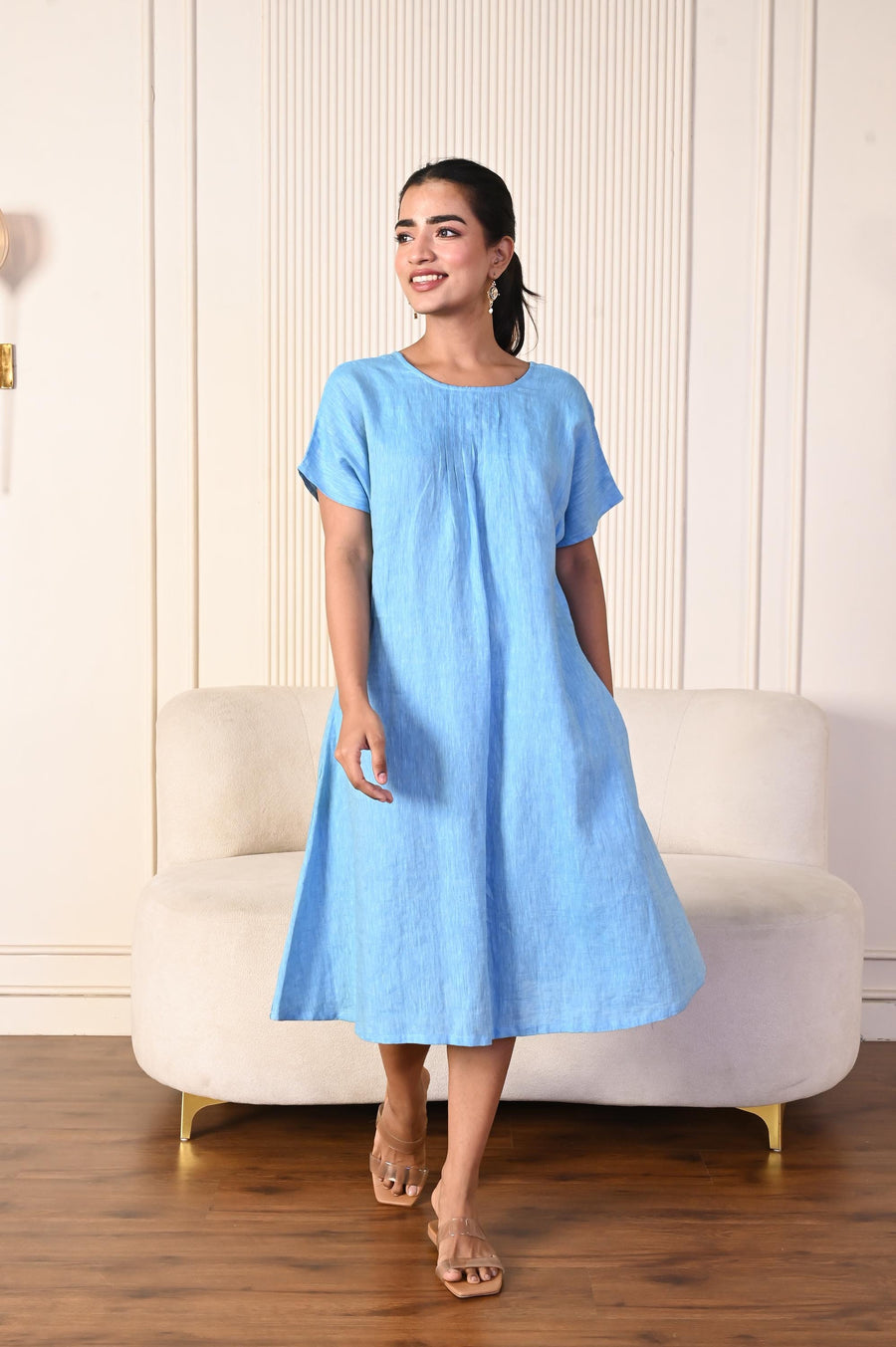
Many people are one size on top and another on the bottom. In a co-ord set or when you order a top and trousers together, each piece can be cut to its own measurements, so you do not have to compromise. A dress covers every measurement at once, which is why it shows a size mismatch more than any other garment. Examples: the relaxed fit linen midi dress, the tapered linen trousers and the light blue linen tunic top.
Men's sizes are different
Men's sizes in our range are garment measurements taken with the shirt laid flat, so the numbers are larger than your body. Lay a shirt you already like flat, measure it, and compare it with the men's table. If you measure your own chest instead, you will choose a size too small. Browse the men's collection and the women's collection with this in mind.
Plus sizes
Standard sizes run to 3XL on both women's and men's pieces. Measurements matter even more at the top of the range. Our article on why plus size linen fit goes wrong explains what to check.
The verdict
Ignore the number on the tag, use a tape measure, and match your measurements to the seller's chart. If they do not match one row, order made to measure. A tape and ten minutes will save a more expensive mistake.
Frequently asked questions
Is a UK size 12 the same as a US size 12?
No. As a rough guide a UK 12 is close to a US 8. Conversions vary by brand, so use measurements rather than a conversion.
What size is an EU 38 in the US?
On our chart, EU 38 sits alongside US 8-10 and size M, with a bust of 35-37 inches (89-94 cm). Check your own measurements against the table.
What if my measurements fall between two sizes?
Send us your measurements within 24 hours of ordering and we cut the garment to them at no extra cost. Otherwise we make the standard size you selected.
Do you list UK and Australian sizes?
No. Our chart gives US and EU sizes with body measurements. We do not publish a UK or Australian conversion because it would be a guess.
Are men's sizes the same as women's?
No. Women's sizes are body measurements, while men's are garment measurements taken with the shirt laid flat. Both run from XS to 3XL.