Made to your measurements  ·  Free shipping worldwide  ·  US orders ship duty paid

Free standard shipping worldwide. Made to your measurements at no extra cost.
Made by hand, one piece at a time. Free shipping worldwide, and US orders arrive duty paid.

Journal

What Is an Intaglio? Carved Glass Jewellery, Explained

PehroDesign · · 2 min read

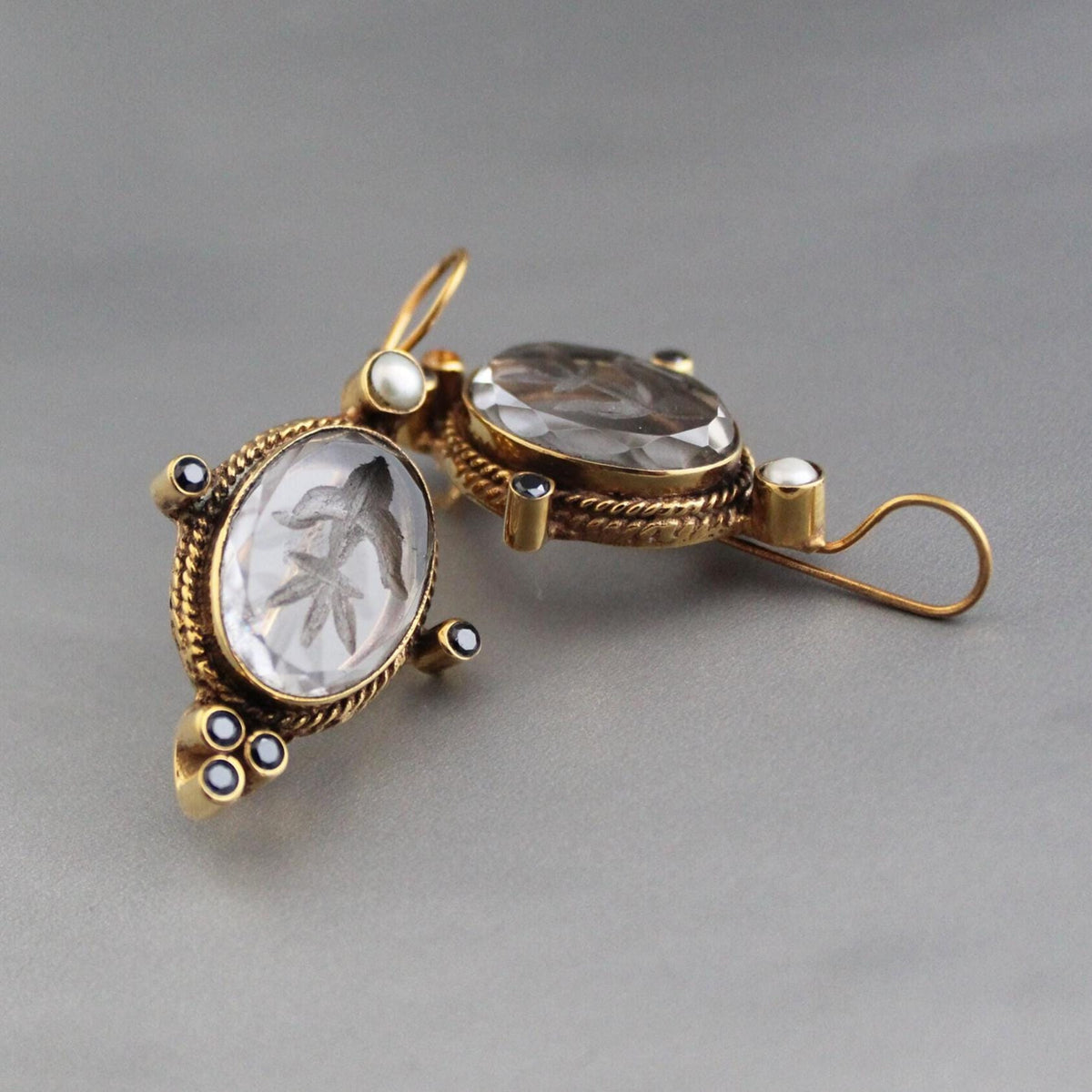
Clear oval intaglio earrings with a carved Roman profile

An intaglio (say it in-TAL-ee-oh) is a picture carved into a surface. Instead of standing up from the stone, the design is cut down below it, like a seal or a stamp. Hold one up to the light and the carving seems to float inside the glass.

Where the word comes from

The word is Italian and comes from intagliare, to cut into or engrave. The technique is far older than the word. Carved seal stones were used in the ancient Near East, Greece and Rome to sign documents and mark property: press the stone into warm wax and the sunken carving leaves a raised picture behind.

From seal stones to jewellery

Roman intaglios often showed gods, heroes, animals and portraits in profile. Centuries later, collectors in 18th century Europe fell in love with them, and craftsmen began casting faithful copies in glass so that more people could own one. Those glass copies are the direct ancestors of the pieces in our collection.

How our intaglios are made

Every intaglio in our jewellery collection is carved glass. The design is cut into the back of a coloured or clear glass stone, then the stone is set by hand in a gold-toned frame, often finished with small pearls. Each piece is measured, cut, soldered, set and polished one at a time, so no two are exactly the same.

Common designs include classical profiles, the laurel wreath, the fleur-de-lis, and animal and botanical motifs.

Why carved glass

  • Depth. Because the carving sits behind the face of the stone, it catches light differently as you move.
  • Colour. Glass can be made in shades that are rare or very costly in natural stone: deep sapphire blue, emerald green, ruby red, opal and smoky tones.
  • History. Glass intaglios are exactly how many 18th and 19th century collectors wore classical designs.

How to choose one

Start with the colour you will wear most. Blue and green suit both gold and everyday clothes; clear glass shows the carving most sharply; red and purple are the boldest. Then pick the shape: round and oval feel classical, square and rectangular lean towards Art Deco. Browse intaglio earrings, rings and necklaces.

Frequently asked questions

Is an intaglio the same as a cameo?

No. A cameo is carved so the design stands out in relief; an intaglio is carved into the surface. Read intaglio vs cameo for the full difference.

Are your intaglios real gemstones?

Our intaglios are carved glass unless a product page says otherwise. Each listing names the materials used.

Can I wear an intaglio every day?

Yes, with a little care. Keep it away from water, perfume and lotion, and store it in its box. See our jewellery care guide.

Shop pure linen

What Is an Intaglio? Carved Glass Jewellery, Explained

13 October 2026, PehroDesign

Clear oval intaglio earrings with a carved Roman profile

An intaglio (say it in-TAL-ee-oh) is a picture carved into a surface. Instead of standing up from the stone, the design is cut down below it, like a seal or a stamp. Hold one up to the light and the carving seems to float inside the glass.

Where the word comes from

The word is Italian and comes from intagliare, to cut into or engrave. The technique is far older than the word. Carved seal stones were used in the ancient Near East, Greece and Rome to sign documents and mark property: press the stone into warm wax and the sunken carving leaves a raised picture behind.

From seal stones to jewellery

Roman intaglios often showed gods, heroes, animals and portraits in profile. Centuries later, collectors in 18th century Europe fell in love with them, and craftsmen began casting faithful copies in glass so that more people could own one. Those glass copies are the direct ancestors of the pieces in our collection.

How our intaglios are made

Every intaglio in our jewellery collection is carved glass. The design is cut into the back of a coloured or clear glass stone, then the stone is set by hand in a gold-toned frame, often finished with small pearls. Each piece is measured, cut, soldered, set and polished one at a time, so no two are exactly the same.

Common designs include classical profiles, the laurel wreath, the fleur-de-lis, and animal and botanical motifs.

Why carved glass

  • Depth. Because the carving sits behind the face of the stone, it catches light differently as you move.
  • Colour. Glass can be made in shades that are rare or very costly in natural stone: deep sapphire blue, emerald green, ruby red, opal and smoky tones.
  • History. Glass intaglios are exactly how many 18th and 19th century collectors wore classical designs.

How to choose one

Start with the colour you will wear most. Blue and green suit both gold and everyday clothes; clear glass shows the carving most sharply; red and purple are the boldest. Then pick the shape: round and oval feel classical, square and rectangular lean towards Art Deco. Browse intaglio earrings, rings and necklaces.

Frequently asked questions

Is an intaglio the same as a cameo?

No. A cameo is carved so the design stands out in relief; an intaglio is carved into the surface. Read intaglio vs cameo for the full difference.

Are your intaglios real gemstones?

Our intaglios are carved glass unless a product page says otherwise. Each listing names the materials used.

Can I wear an intaglio every day?

Yes, with a little care. Keep it away from water, perfume and lotion, and store it in its box. See our jewellery care guide.